Vienna's Musical Soul: A 3-Hour Walk Through the City of Composers
Highlights
- Stand outside the Vienna State Opera, where Mahler changed how the world listens
- Visit the Musikverein's Golden Hall, home of the world-famous New Year's Concert
- See Mozart's only surviving Viennese apartment, where he wrote The Marriage of Figaro
- End at the Pasqualati House, where Beethoven composed his 5th and 7th Symphonies
Stop by stop

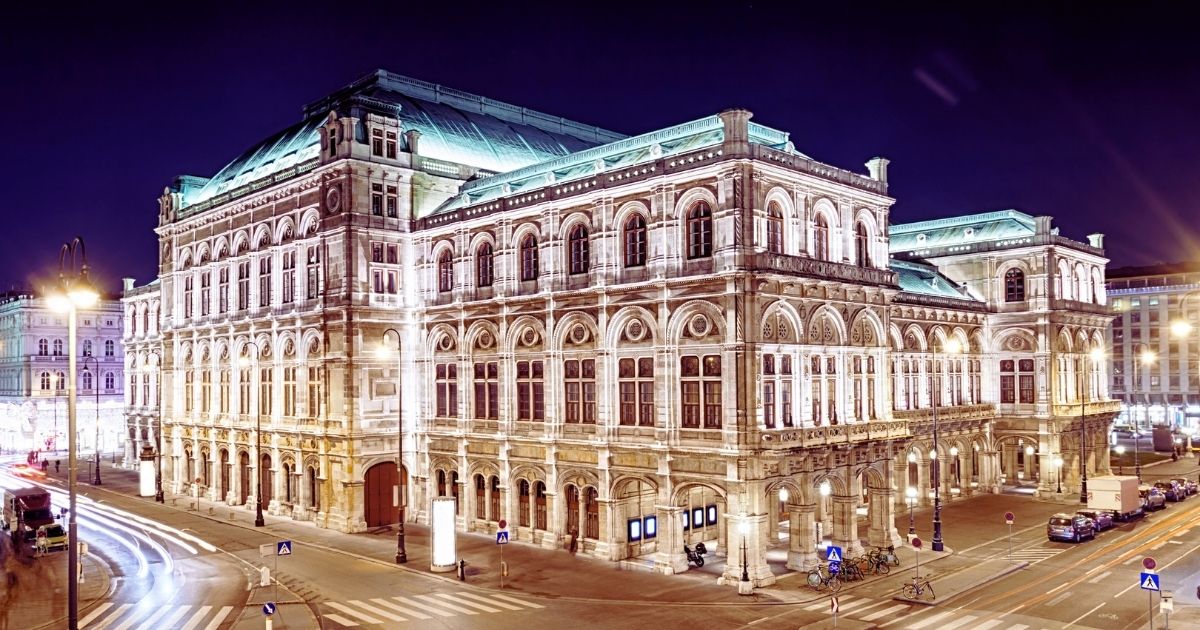
Vienna State Opera
The spiritual home of Viennese music, opened in 1869 on the grand Ringstraße.
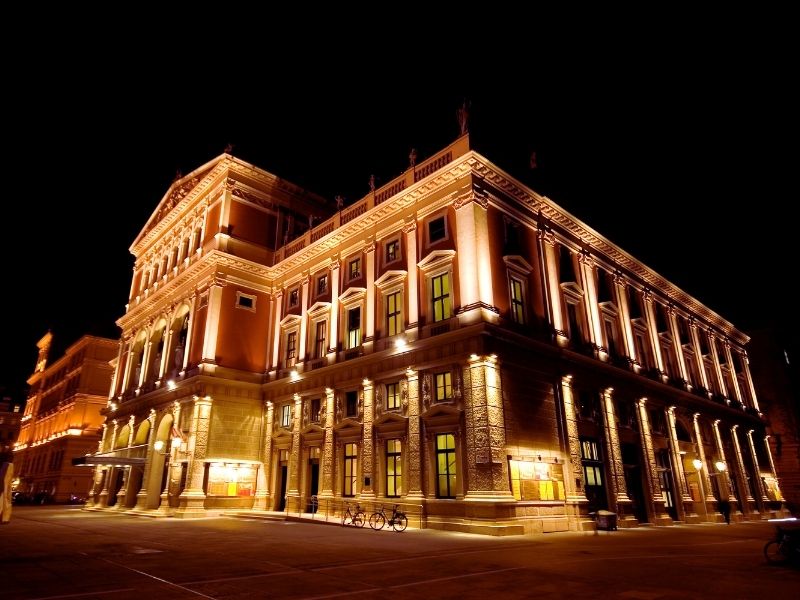
Musikverein
Home of the Vienna Philharmonic and the Golden Hall, one of the world's finest concert venues.
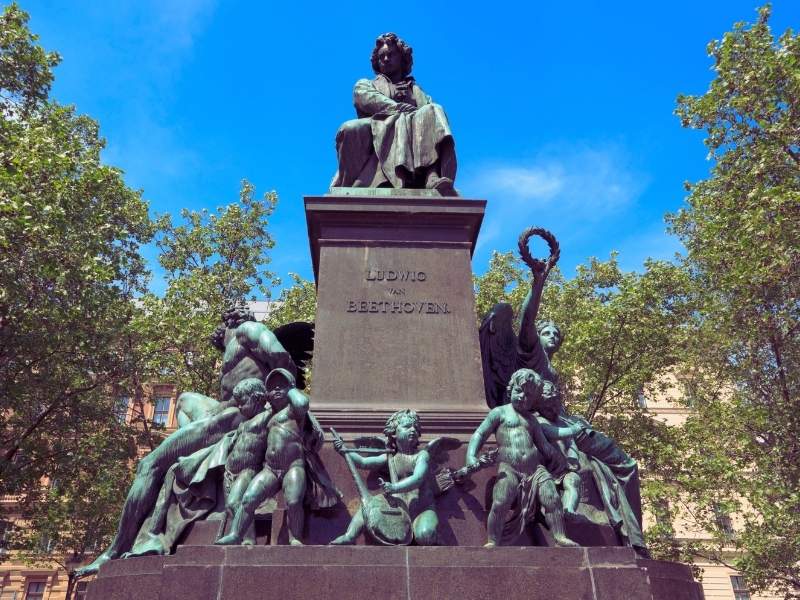
Beethovenplatz
A quiet square anchored by the heroic bronze monument to Ludwig van Beethoven.

Stadtpark — Strauss Monument
The gilded Johann Strauss II statue, Vienna's most photographed image and symbol of the waltz.
Haus der Musik
The palace where the Vienna Philharmonic was founded in 1842, now an interactive music museum.
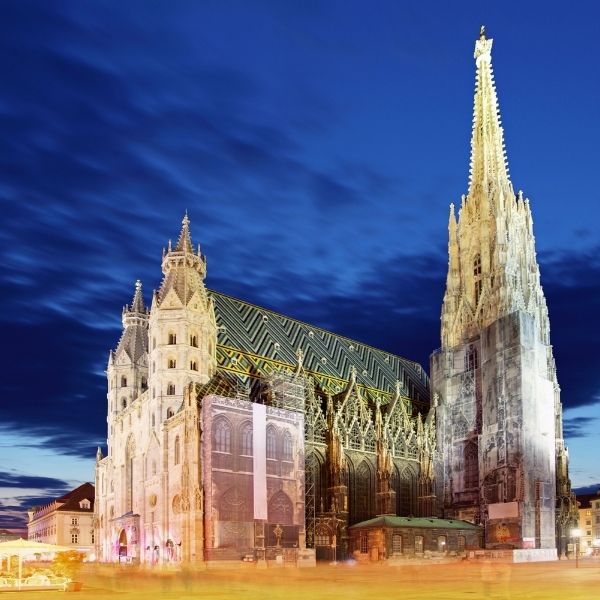
Stephansdom
Mozart was married here, and his funeral was held in its Crucifix Chapel in 1791.
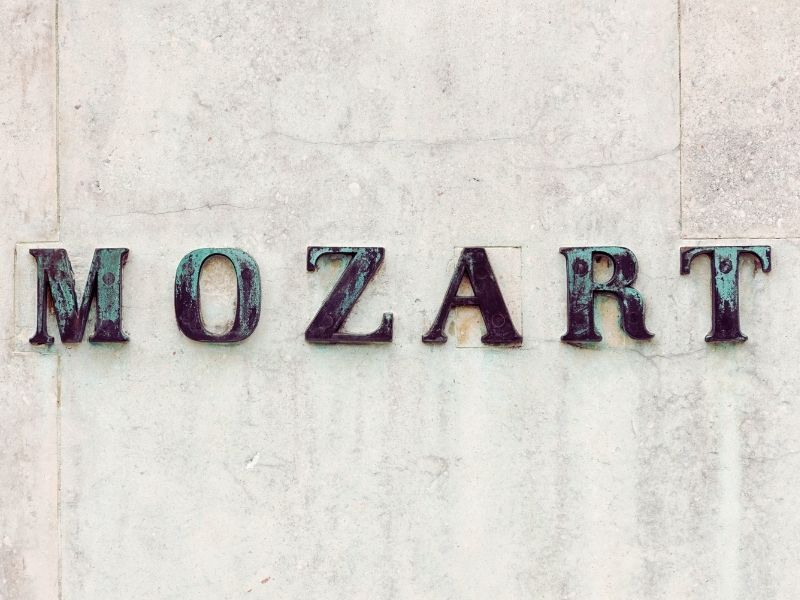
Mozarthaus Vienna
Mozart's only surviving Vienna apartment — where he lived at his peak and composed The Marriage of Figaro.
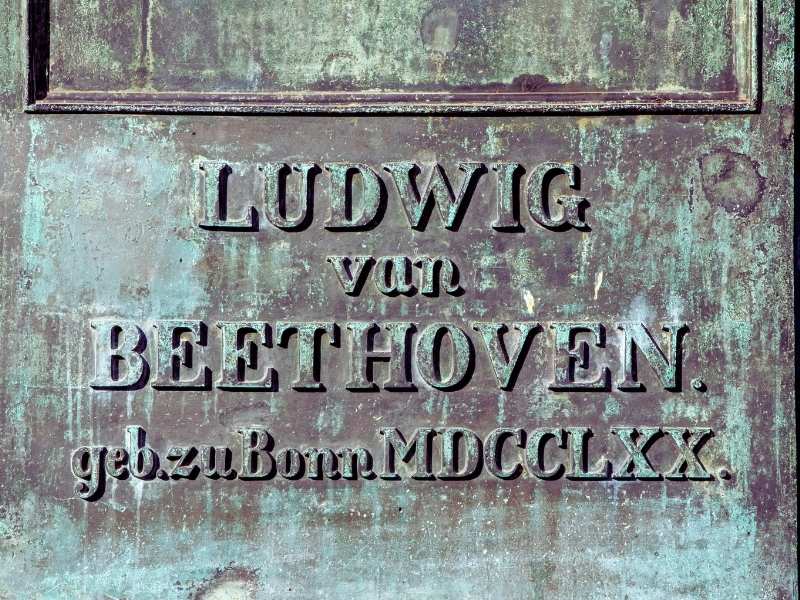
Pasqualati House
Beethoven's home for eight years, perched on the old city walls — where he wrote four symphonies and Fidelio.
Overview
Vienna doesn't just have a musical history — it is musical history. No other city on earth can claim to have been the creative home of Haydn, Mozart, Beethoven, Schubert, Brahms, Bruckner, Mahler, and the Strauss dynasty simultaneously. Walk its streets and you are walking through the biography of Western classical music itself.
This tour traces a 4-kilometre arc through the inner city, moving between the grand institutions where that music was performed and the intimate addresses where it was composed. The emotional thread running through the route is a contrast that defined Vienna's 19th century: the golden, irresistible lightness of Johann Strauss II — the waltz, the ballroom, the city at play — set against the dark, revolutionary fire of Beethoven, a man who wrestled with fate, deafness, and the very meaning of human suffering in the same streets. Both spirits haunt this city. You'll meet them both.
Come prepared to stop, look up, and listen. Even without a note of music playing, these buildings and squares have an atmosphere that is hard to explain and impossible to forget.
Stop by Stop
Vienna State Opera (Wiener Staatsoper)
We begin at the spiritual anchor of Viennese musical life, the building that Viennese citizens have argued about, mourned over, and adored for more than 150 years. The State Opera was the first major monument completed on the Ringstraße — Emperor Franz Joseph I's grand boulevard project that transformed Vienna into a showcase of imperial ambition — and it opened in May 1869 with a performance of Mozart's Don Giovanni.
The backstory of its construction is one of Vienna's most tragic. The architects, August Sicard von Sicardsburg and Eduard van der Nüll, poured years of their lives into this building. The Viennese press was merciless — they mocked it as a "sunken box" and a "brick heap" because the street level had been raised during construction, making the grand entrance steps less imposing than planned. Emperor Franz Joseph, when asked his opinion, gave a diplomatically bland response that was interpreted as damning. Van der Nüll, unable to bear the public humiliation, took his own life in March 1868 — two months before the building opened. Sicardsburg died of a stroke just ten weeks later, having never seen the finished work. After that, the Emperor reportedly became very careful never to publicly criticize anything again, and courtiers noted that his standard response to any cultural offering became: "It was very nice, it pleased me greatly."
The opera's most consequential director was Gustav Mahler, who ran the house from 1897 to 1907 with the ferocity of a man who believed music was a sacred duty. He banned latecomers from entering during acts — a policy that caused outrage among the Viennese aristocracy, who considered the opera a social occasion as much as a musical one. He was right, of course, and the practice is now standard worldwide.
Insider tip: Look at the loggia above the main entrance — the arched arcade with its statues of opera and music. This is one of the few parts of the original building that survived the catastrophic Allied bombing of March 1945, which gutted the interior entirely. The rebuilt house reopened in 1955 with Beethoven's Fidelio — a choice that was deeply symbolic.
The Musikverein (Golden Hall)
A five-minute stroll across the Ringstraße brings you to a building of near-mythical acoustic status. The Musikverein — literally the "Music Association" — was completed in 1870 as the home of the Gesellschaft der Musikfreunde, one of the oldest music societies in the world, and it remains the permanent home of the Vienna Philharmonic.
The centrepiece is the Großer Saal, universally known as the Goldener Saal — the Golden Hall. It is routinely ranked among the three finest concert halls on the planet, alongside Amsterdam's Concertgebouw and Boston Symphony Hall. What makes it extraordinary is its warmth: a deep, resonant sound that wraps around the listener like a physical presence rather than a set of frequencies.
The remarkable thing is that this wasn't engineered. The building was designed by Theophil Hansen and completed in 1870, two decades before the science of architectural acoustics was formalised. The hall's success comes from a combination of factors that Hansen arrived at intuitively: the shoebox shape, the hollow timber floor acting as a resonating chamber, the plaster ceiling at precisely the right height, and the density of gilded ornament and carved figures that diffuses sound without deadening it. It was, essentially, a fortunate accident of great taste.
The Musikverein is also the site of the New Year's Concert, broadcast live to an estimated 50 million viewers in 90 countries every 1st of January. The programme is always waltzes and polkas — always Strauss — and has never changed in spirit since the first concert in 1939.
Insider tip: The hall holds 1,744 seats, but the standing room at the back (the Stehparterre) holds an additional 300. Standing tickets for regular concerts go on sale 45 minutes before the performance and cost a fraction of a seated ticket. If you want to hear the Philharmonic in this room, this is how most Viennese music lovers actually do it.
Beethovenplatz
Head through the side streets toward the Ringstraße again and you'll find this quiet, tree-lined square — a place of genuine contemplative calm in the middle of the city. At its centre stands a large bronze monument to Ludwig van Beethoven, unveiled in 1880 to a design by Caspar von Zumbusch.
Beethoven is depicted standing, his coat thrown open, his head slightly bowed, as though listening to something only he can hear — which, given his progressive deafness, carries a particular poignancy. The plinth below is where the tour's deeper themes come alive. Look closely at the base: you'll see the figure of Prometheus, the Titan who stole fire from the gods and gave it to humanity, flanked by two groups of figures representing the forces of light and darkness. This wasn't accidental decoration. Beethoven had a deep connection to the Prometheus myth — his Creatures of Prometheus ballet (1801) and the use of the Prometheus theme in the final movement of the Eroica Symphony made the connection explicit. He saw himself, to some degree, as someone who had seized something elemental and given it to the world at great personal cost.
The monument captures the transition that this tour is really about: from the elegant, god-given perfection of Mozart and Haydn's classical world, where music seemed to flow naturally from divine order, to Beethoven's era of the heroic artist — the individual struggling against fate, transforming suffering into something universal and permanent.
Insider tip: Sit on one of the benches facing the statue and look back toward the Musikverein. You are sitting almost exactly on the axis between the two institutions that defined Viennese musical life — the concert hall where the Philharmonic plays and the square honouring the composer whose symphonies they perform more than any other.
Stadtpark — The Strauss Monument
Enter the Stadtpark through its Ringstraße gate and follow the path to the most photographed statue in Vienna. The gilded figure of Johann Strauss II, violin raised mid-bow, framed by a white marble arch, has appeared on more postcards, posters, and chocolate boxes than any other image in the city. It is almost aggressively beautiful.
Strauss — known as the "Waltz King" or simply the "King" in Vienna — was the pop star of the 19th century. His waltzes weren't concert pieces to sit respectfully through; they were dance music, and the dances they accompanied were the defining social ritual of bourgeois Viennese life. The Blue Danube (1866), written in a week to fill a commission, became an anthem for a city that needed something to celebrate after a crushing military defeat by Prussia. It became, and remains, the unofficial national song of Austria.
The statue, unveiled in 1921, was created by Edmund Hellmer. At the unveiling ceremony, the Vienna Philharmonic performed The Blue Danube in the open air beside the monument — a moment that would have seemed perfectly natural to anyone who understood what Strauss meant to Vienna. Where Beethoven represents the city's tormented, striving side — the music that reaches toward something unreachable — Strauss represents its capacity for joy, its refusal to be entirely serious, its love of beauty and pleasure and the swirling, hypnotic present tense of a waltz.
Insider tip: The Kursalon, the elegant neo-Renaissance pavilion just east of the statue, hosts regular Strauss and Mozart concerts in a formal salon setting. Touristy, yes — but the venue itself is genuinely beautiful, and an evening here closes the circle on everything this part of the tour is about.
Haus der Musik
Leave the park and head back toward the centre for ten minutes to reach Seilerstätte 30, a former aristocratic palace that now houses one of the most inventive music museums in Europe. The building itself has a founding claim on Viennese musical history: this was the residence of Archduke Charles, and it was here, in 1842, that the conductor Otto Nicolai gathered the court opera's orchestra musicians to give a series of concerts for the public. That ensemble became the Vienna Philharmonic — arguably the most consistently celebrated orchestra in the world for the past 180 years.
The museum inside is worth time if you have it: it features interactive acoustic exhibits, a floor dedicated to each of the great Viennese composers, and a conductor simulator where you can attempt to lead the Philharmonic through a symphony (results vary). But even standing in the inner courtyard is enough to feel the weight of what was founded here.
This is also a good place to discuss what musicologists call the "Viennese sound" — a quality distinct to the Philharmonic that has to do not just with technique and tradition but with the instruments themselves. The Vienna Philharmonic is one of the last major orchestras to use Vienna-specific instrument designs: the Wiener Horn, with its narrower bore and different rotary valves, produces a rounder, more mellow tone than the modern French horn used everywhere else. The Vienna Oboe is softer and more reedy than the standard Conservatoire oboe. These instruments are relics of the 19th century, maintained by a handful of specialist craftsmen. The sound they produce is, quite literally, the sound Brahms and Bruckner heard when their symphonies were first performed.
Insider tip: The shop on the ground floor sells excellent recordings of the New Year's Concert going back decades — a genuinely worthwhile souvenir, and far more portable than a Sachertorte.
Stephansdom (St. Stephen's Cathedral)
Ten minutes of walking brings you to the beating heart of Vienna — the Gothic spire of St. Stephen's Cathedral rising above the roofline as it has since the 14th century. Every Viennese person navigates by this tower. Every tourist orients by it. And for the composers who lived and worked in this city, it was the constant of their lives.
Wolfgang Amadeus Mozart's connection to this cathedral is personal and profound. He was married here on 4 August 1782, to Constanze Weber, in a ceremony attended by almost no one from either family — his father Leopold was opposed and refused to come. Two of his children were baptised within these walls. And when he died on 5 December 1791, aged 35, his funeral service was held in the Kruzifixkapelle — the Crucifix Chapel on the north side, which you can stand outside and look at from the street. There was no grand ceremony. The city that had adored his operas paid him a modest farewell. He was buried in a common grave at the Cemetery of St. Marx.
Less well-known is Antonio Vivaldi's connection to the same building. The Italian master, who had composed over 500 concertos and was the most published composer in Europe in his prime, died in Vienna in July 1741, nearly forgotten, his manuscripts unsold. His funeral was held at Stephansdom too — a simple service for a man who had once been celebrated across the continent. The young Joseph Haydn, then a choir boy in Vienna, is thought to have sung at Vivaldi's funeral. The wheel of musical history turns in strange, small circles.
Insider tip: Stand on the south side of the cathedral and look up at the roof — the intricate geometric tiling in chevrons and the double-headed eagle of the Habsburgs. This is one of the most extraordinary decorative surfaces in Central Europe and almost everyone walks past without looking up.
Mozarthaus Vienna (Domgasse 5)
Two minutes from the cathedral's east side, through a narrow passage, you reach Domgasse 5 — a doorway that opens onto the only surviving apartment Mozart occupied in Vienna. He lived in more than a dozen addresses during his decade in the city, moving frequently as his fortunes rose and fell. This one, where he lived from 1784 to 1787, represents the peak.
These were the years of Mozart's greatest worldly success. He was performing his own piano concertos to packed subscription concerts. He was earning more than a senior court official. He was engaged socially, creatively, and financially at the highest level the city offered. The apartment was expensive — four rooms, a kitchen, a study — and he chose it deliberately. This was a statement of arrival.
It was here, in the study, that he composed Le nozze di Figaro (The Marriage of Figaro), premiered at the Burgtheater in 1786. The opera — a comedy about a count trying to sleep with his servant's fiancée on her wedding day, outsmarted at every turn by women and servants — was based on a French play that had been banned in Vienna for its political implications. That Mozart and his librettist Da Ponte got it staged at all is a minor miracle of cultural diplomacy. That it became one of the most performed operas in history is less surprising once you've spent an hour in these rooms imagining the concentration and joy that went into it.
Insider tip: The museum is spread across three floors and is genuinely absorbing — but if you're tight on time, even standing in the courtyard and looking up at the windows of the apartment is enough. The building has been altered but the courtyard retains something of its 18th-century character. Mozart would recognise it.
Mölker Bastei — Pasqualati House
The final stop requires the tour's longest walk — about 20 minutes through the old city, heading northwest — and it's worth every step. The Pasqualati House sits on Mölker Bastei, a raised promenade built on the last surviving section of Vienna's medieval city walls. The view over the Ringstraße and the rooftops below is one of the best free viewpoints in the city.
Beethoven lived in this building, in the apartment on the fourth floor, on and off for eight years. His patron, Johann Baptist von Pasqualati, was so fond of him that he refused to rent the apartment to anyone else during Beethoven's frequent absences, reportedly telling enquirers simply: "The apartment is for Beethoven. He will come back." And he always did.
The works composed here read like a summary of everything that makes Beethoven's middle period extraordinary: the 4th, 5th, 7th, and 8th Symphonies; the opera Fidelio; the Piano Concerto No. 4. These are not just great pieces — they are the foundation of the modern orchestral repertoire. Everything that came after in Western classical music is in conversation with what Beethoven wrote at this address.
He chose the apartment partly for practical reasons — Pasqualati was generous and the rent was manageable — but also, it seems, for the view and the air. Beethoven was obsessed with walking. He took long walks every day, often pacing the old city walls on this very stretch of Mölker Bastei, humming and gesturing, working out melodic problems in the open air. His sketchbooks are full of ideas caught mid-walk. He was also, by this point, losing his hearing — and the height and openness of this location, away from the noise of the streets below, may have offered him something like the quiet he was losing access to from within.
Stand at the railing, look out over the city, and consider that the man who wrote the Fifth Symphony did so in a small apartment directly above you, half-deaf, walking in circles on the stones beneath your feet.
Insider tip: The apartment museum inside is small but moving — particularly the letter known as the Heiligenstadt Testament, in which Beethoven, at 31, wrote what reads like a farewell to life before resolving to continue for the sake of his art. The original is elsewhere, but a facsimile is displayed here. Read it slowly.
Practical Tips
- Best time to walk: Weekday mornings (9–12) are quietest. Saturday afternoons can be crowded around Stephansdom and Stadtpark.
- What to wear: Comfortable walking shoes — some streets are cobbled, particularly around Stephansdom and Mölker Bastei.
- Entry costs: Stadtpark and Beethovenplatz are free. Mozarthaus Vienna (adult ~€14), Haus der Musik (adult ~€17), and the Pasqualati House apartment (adult ~€5) all have entry fees. Budget €25–35 if visiting all three interiors.
- Café stop: The Café Schwarzenberg on the Ringstraße, between the State Opera and the Stadtpark, is one of the oldest grand cafés in Vienna. A logical midpoint rest.
- Getting there: U1 or U2 to Karlsplatz (State Opera exit) to start. The tour ends at Schottentor (U2), a short walk from Mölker Bastei.