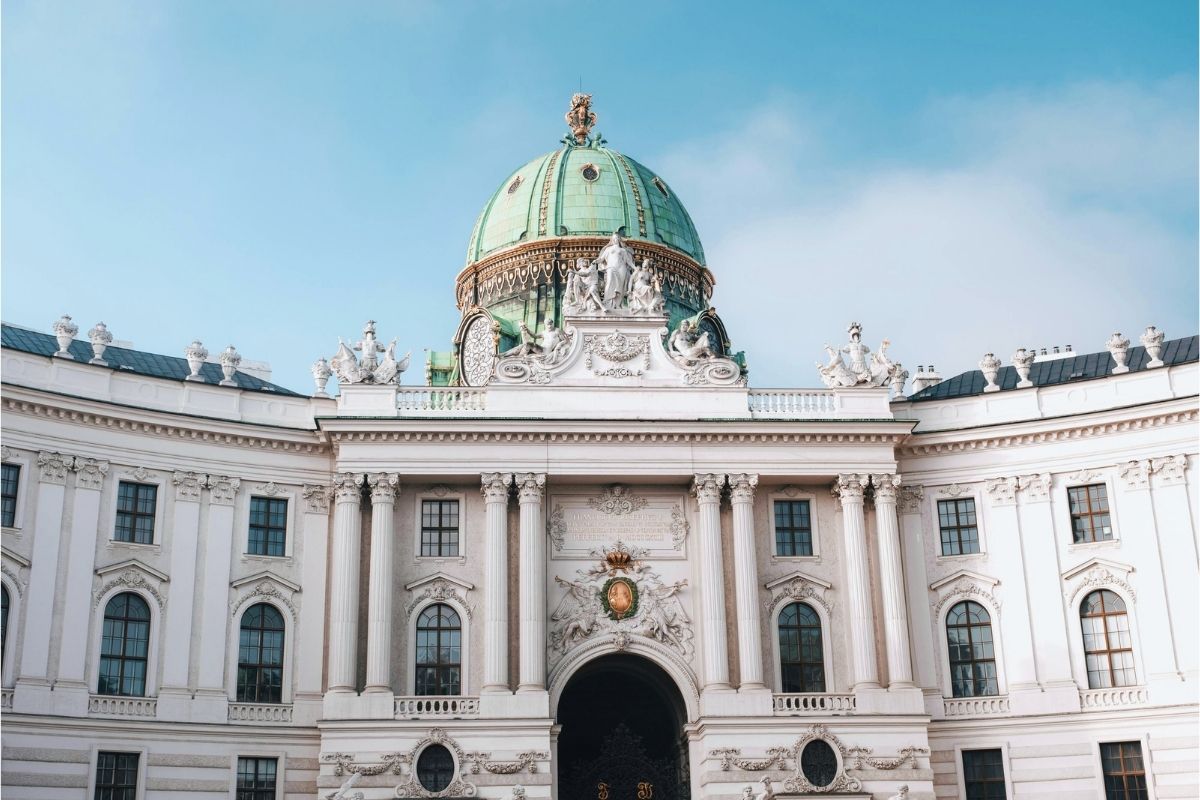
Imperial Vienna (2.5 hours)
Highlights
- Explore the full Hofburg Palace complex
- Pass the legendary Spanish Riding School
- Pause in the serene Burggarten beside Mozart's statue
- Walk Kärntner Straße, Vienna's grandest shopping avenue
Stop by stop
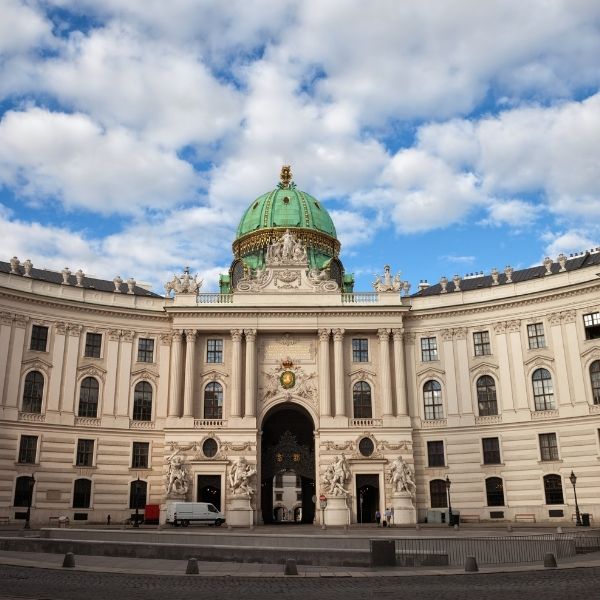
Hofburg Palace
The sprawling winter residence of the Habsburg emperors.

Spanish Riding School
Home to the world-famous Lipizzan horses and classical dressage since 1572.

Burggarten
A peaceful palace garden with iconic statues of Mozart and Franz Joseph I.

Albertina
One of the world's greatest graphic art collections, housed in a Habsburg palace.

Kärntner Straße
Vienna's elegant pedestrian boulevard linking the Staatsoper to Stephansdom.
Overview
For six centuries, Vienna was the capital of the Habsburg Empire — the most powerful dynasty in European history. The city they built reflects that ambition at every turn: immense palaces, triumphal boulevards, ceremonial squares, and cultural institutions designed to awe the world. This 2.5-hour walk takes you deep into that imperial legacy, from the innermost courtyards of the Hofburg to the grand arc of Kärntner Straße.
Unlike a quick city tour, this route gives you time to breathe inside the spaces rather than simply pass them. You'll walk through the Hofburg's layered history, stand in the garden where Mozart is immortalised in bronze, visit the world's most prestigious equestrian institution, and finish on Vienna's most elegant shopping street. The pace is relaxed; the distances are modest; the impression is lasting.
Come with comfortable shoes and — if the season allows — bring layers for the garden stretches, which can be breezy in autumn.
Stop by Stop
Hofburg Palace
The Hofburg began as a 13th-century fortress and grew, wing by wing, into the largest palace complex in Europe: 18 wings, 19 courtyards, and over 2,600 rooms. Habsburg rulers from Rudolf I to Franz Joseph I all left their mark here, which is why the architecture spans seven centuries from Gothic to neo-Baroque without ever quite resolving into a single style.
Begin your visit at the Michaelerplatz entrance and take time to read the excavations visible through the glass panels in the square — Roman ruins and medieval remains that remind you how old this ground truly is. Pass through the Michaelertor under its copper dome and into In der Burg, the main courtyard, where the four wings representing different eras of Habsburg construction surround you on all sides.
Insider tip: The free-to-enter Swiss Court (Schweizerhof), the oldest part of the Hofburg, is often overlooked. The Gothic fountain at its centre and the Swiss Gate — with its date of 1552 inscribed in stone — offer a quiet moment away from the main tourist flow.
Spanish Riding School
Just inside the Hofburg complex, the Spanish Riding School is one of the most extraordinary institutions in the world of horsemanship. Founded in 1572, it has maintained the tradition of classical dressage — Haute École — in an unbroken line for over 450 years. The Lipizzan horses, bred at the imperial stud farm in Piber, perform movements of extraordinary precision and grace in the Winter Riding School, a Baroque hall of white stucco and crystal chandeliers built in 1735.
Even if you are not attending a performance, the exterior of the Winterreitschule and the glimpse through the archways into the Josefplatz courtyard are worth a stop. Morning training sessions (when horses are exercised) are often open to visitors at reduced prices — check the school's schedule in advance.
Burggarten
Exit the Hofburg through the Burgtor gate onto the Ringstraße and cross into the Burggarten — the former private garden of the Habsburg emperors, opened to the public in 1919. It is a pocket of calm in the centre of the city: mature plane trees and chestnut avenues, manicured lawns, and the elegant Palmenhaus glasshouse at its southern edge.
The garden's most photographed moment is the bronze statue of Wolfgang Amadeus Mozart, installed in 1896 and relocated here in 1953. Surrounded by flowerbeds arranged in the shape of a treble clef, it remains one of Vienna's most-visited spots — though somehow it never feels crowded. Nearby stands a more reflective statue of Emperor Franz Joseph I.
Insider tip: The Palmenhaus has been converted into a café-bar with some of the most impressive interiors in Vienna — Art Nouveau ironwork and floor-to-ceiling glass. Stop here for coffee if you need a break before continuing.
Albertina
From the Burggarten, a short walk along the Augustinerstraße brings you to the Albertina, a Habsburg palace perched atop the Augustinian bastion — one of the last surviving sections of Vienna's city fortification. Founded in 1776 by Duke Albert of Saxe-Teschen, the Albertina now holds one of the largest graphic art collections in the world: over a million prints and drawings including Dürer's Young Hare and Praying Hands, as well as major works by Klimt, Schiele, Monet, and Picasso.
The terrace in front of the Albertina offers a sweeping view over the Burggarten and across to the Staatsoper — one of Vienna's finest free viewpoints. On the terrace stands the equestrian statue of Archduke Albert, frozen in triumph from the Battle of Custoza.
Kärntner Straße
Vienna's most famous street stretches south from near the Albertina all the way to Stephansdom, forming the main axis of the inner city pedestrian zone. Kärntner Straße has been a trade route since Roman times; today it is lined with international luxury brands, local Viennese retailers, grand hotels, and street musicians who attract a loyal daily audience.
Walk north (toward Stephansdom) to end the tour at Vienna's spiritual centre, or south (toward the Staatsoper) to finish on the steps of the world's second-most important opera house. Either direction is rewarding. The Staatsoper's guided tours, departing from the Ringstraße side, are excellent and typically available several times daily.
Practical Tips
- Best time to walk: Mid-morning on weekdays avoids the largest tour groups at the Hofburg.
- What to wear: Flat shoes are essential — the Hofburg cobblestones are beautiful but uneven.
- Entry costs: The Hofburg exterior and courts are free. The Imperial Apartments + Sisi Museum + Imperial Silver Collection costs €16. Albertina admission is €18.50.
- Café stop: Café Central (Herrengasse 14, just north of the Hofburg) is one of Vienna's most celebrated coffeehouses — a worthwhile detour.
- Getting there: U3 Herrengasse drops you a 3-minute walk from the Hofburg Michaelertor entrance.