Karlskirche Vienna: Complete Guide to Karlplatz & St Charles Church
— Discover the Baroque Karlskirche on Vienna's Karlplatz — history, panoramic lift, concerts, ticket prices, Otto Wagner pavilions, and insider tips.
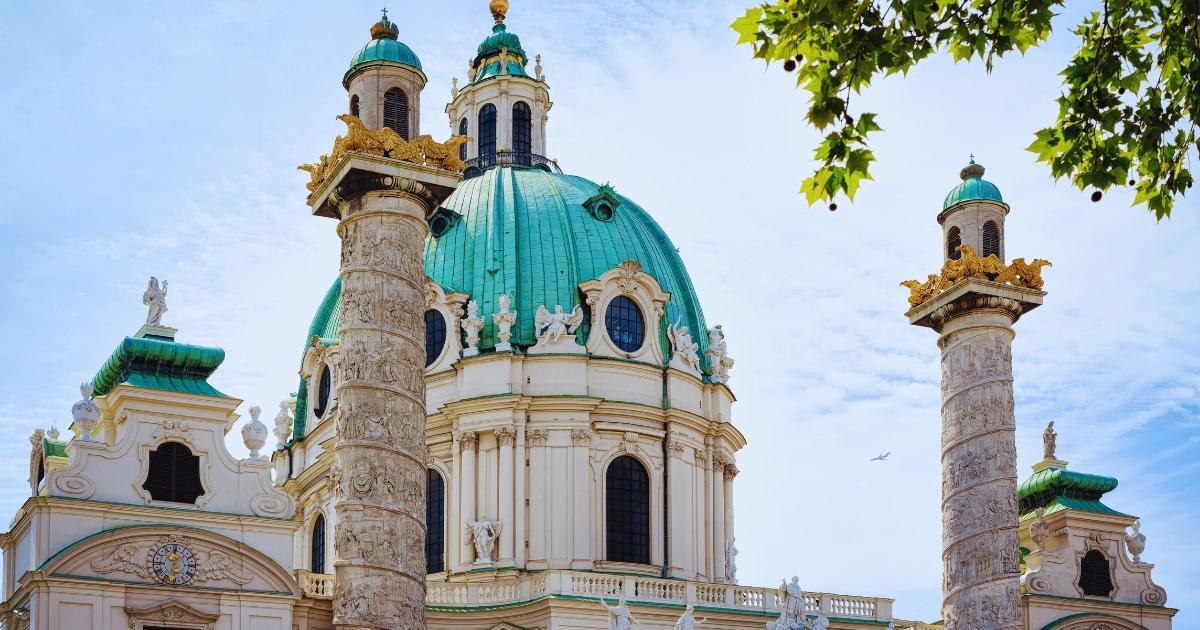
If you're planning a trip to Vienna and want to visit one landmark that perfectly captures the city's imperial grandeur, artistic brilliance, and layered history — Karlskirche Vienna is it. Rising above the leafy expanse of Karlplatz, this extraordinary Baroque church is not just one of Vienna's most photographed buildings; it's one of the most significant sacred structures in all of Central Europe.
This guide covers everything you need to know before you visit: the full history of Karlplatz and Karlskirche, what to see inside, how to reach the panoramic viewing platform, what concerts are on, practical ticket and opening hours information, and the other unmissable attractions right on the square.
What Is Karlplatz?
Karlplatz — literally "Charles Square" — is one of Vienna's most important public squares and transport hubs, sitting on the boundary between the first district (Innere Stadt) and the fourth district (Wieden). It is ringed by cultural heavyweights: the Musikverein concert hall, the Technical University of Vienna (TU Wien), the Wien Museum, and, of course, the Karlskirche itself.
Far from being just a traffic interchange, Karlplatz is a living part of Viennese life. The central park area — known as Resselpark — fills with students, locals, and tourists year-round. In summer, a large reflecting pool in front of the Karlskirche mirrors the dome in a picture-perfect scene. In the weeks before Christmas, the square hosts the beloved Art Advent Christmas market, where the illuminated Karlskirche glows behind the stalls in one of the most atmospheric settings in Vienna.
The square is served by three underground lines — the U1, U2, and U4 — making it one of the best-connected spots in the city.
The History of Karlskirche: A Church Born from Plague
To understand Karlskirche, you need to go back to 1713, when one of the last great plague epidemics swept through Vienna. Emperor Charles VI — who notably stayed in the city rather than retreating to safety — made a solemn vow: if Vienna were spared further devastation, he would build a great church dedicated to his namesake saint, Saint Charles Borromeo.
Saint Charles Borromeo (1538–1584) was the Archbishop of Milan and a towering figure of the Counter-Reformation, celebrated above all for his selfless ministry to the people of Milan during the plague of the 1570s. For an emperor named Charles, the saint was a natural patron.
True to his vow, Charles VI announced an architectural competition. Among the finalists were the celebrated stage designer Ferdinando Galli-Bibiena and Charles VI's own imperial architect Johann Lukas von Hildebrandt. But the commission went to Johann Bernhard Fischer von Erlach, already renowned as the designer of Schönbrunn Palace and widely considered the greatest Baroque architect of the Habsburg world.
Construction began in 1716. Fischer von Erlach died in 1723 before the project was finished, and his son Joseph Emanuel Fischer von Erlach completed the church in 1737, making some modifications to the original plans along the way. The church was formally consecrated in 1739.
Architecture: A Masterpiece of the Viennese Baroque
Walking toward Karlskirche across Resselpark, you have the rare Viennese pleasure of experiencing a grand building from a distance — a long, unobstructed approach that allows the full majesty of the façade to reveal itself gradually.
The Twin Columns
The most arresting feature of the exterior — and the detail that sets Karlskirche apart from every other Baroque church in Europe — is the pair of giant freestanding columns flanking the entrance portal. Each column stands 47 metres tall and is wrapped in a continuous spiral relief depicting scenes from the life of Saint Charles Borromeo. The columns are a direct reference to Trajan's Column in Rome, a classicising gesture that speaks to Fischer von Erlach's ambition to fuse Roman imperial iconography with Baroque dynamism. Golden imperial eagles atop the columns signal that this was very much a dynastic monument as much as a religious one.
The Dome and Façade
Between the columns, a classical Greek portico of six columns leads to the entrance. The pediment above carries marble reliefs — the work of Giovanni Stanetti — depicting the sufferings of the Viennese people during the 1713 plague. Crowning it all is a statue of Saint Charles Borromeo by Lorenzo Mattielli.
The great dome rises to a height of 72 metres, making it one of the most prominent silhouettes in Vienna. The entire composition — Baroque dome, classical portico, and triumphal columns — is deliberately eclectic, blending Greek, Roman, and Baroque idioms into something entirely its own.
The Interior: Gold, Marble, and a 1,250 m² Fresco
Step through the entrance and the interior envelops you in the controlled opulence that defines the best of the Viennese Baroque. Red and gold marble dominate. The richly decorated high altar — also designed by Fischer von Erlach — draws the eye immediately.
The overwhelming masterpiece of the interior is the ceiling fresco by Johannes Michael Rottmayr, covering an extraordinary 1,250 square metres of the dome's interior surface. Painted in vivid, candy-coloured hues, it depicts the heavens populated with saints, angels, and allegorical figures — all connected thematically to Charles Borromeo and the deliverance of Vienna from plague.
In the vestibule, a 2.47-metre-tall architectural model of the church itself is on display — an exact replica that lets you study the intricate details of both the interior and façade up close.
The Panoramic Lift: Getting Eye-to-Eye with the Frescoes
One of the most extraordinary visitor experiences in Vienna is accessible right inside Karlskirche. Since 2002, a panoramic lift and staircase carry visitors 33 metres up into the dome interior, to a viewing platform just beneath the fresco ceiling.
From this platform, you can examine Rottmayr's masterpiece at close range — an experience that would otherwise require a telescope from the nave below. The view down into the church is equally vertiginous and spectacular, and from the windows in the dome, a 360-degree panorama takes in Karlsplatz, the Musikverein, the Technical University, and the rooftops of Vienna beyond.
Note: some visitors find the steel staircase visually incongruous with the Baroque interior, and the mesh wire on the dome windows can limit photos from the top. Nevertheless, the close encounter with Rottmayr's frescoes alone makes the ascent very much worthwhile. There is also an outside terrace above the entrance portal, reached via the organ gallery, offering a beautiful direct view over Karlsplatz and Resselpark.
The Museo Borromeo (Treasury)
Inside Karlskirche, a small but compelling treasury called the Museo Borromeo displays sacred objects connected to Saint Charles Borromeo himself. Among the highlights are the historic travelling clothes of the saint — intimate relics that bring the Counter-Reformation figure to life in a surprisingly personal way.
Classical Concerts at Karlskirche
Karlskirche is widely regarded as one of the finest concert venues in Vienna — and given the competition in this city, that is no small claim. The church's acoustics are exceptional, and the setting is incomparable.
The resident ensemble Orchestra 1756 — named after Mozart's birth year — performs regularly in the church, specialising in historically informed performances using period instruments. Their regular programmes include Mozart's Requiem and Vivaldi's Four Seasons, among other Baroque and Classical masterpieces.
The Vivaldi connection to Karlskirche is particularly resonant: the Italian composer spent his final years in Vienna and died here in 1741. A commemorative plaque on the TU Wien building, diagonally opposite the church, marks the spot near his original burial site. A plaque near the ticket counter also records a more recent historical footnote: the funeral of composer Anton Bruckner was held in Karlskirche on 14 October 1896.
During Advent, the church fills with atmospheric gospel singing as part of the Christmas season programme. Booking concerts in advance is strongly recommended — performances regularly sell out.
Also on Karlplatz: The Otto Wagner Pavilions
While you're in Karlplatz, do not overlook the two extraordinary Art Nouveau pavilions that sit just beside the underground station exits — a breathtaking contrast to the Baroque grandeur of the Karlskirche just across the park.
Designed by Otto Wagner and built in 1898 as part of Vienna's new Stadtbahn (urban railway), the two pavilions are among the finest examples of Jugendstil (Art Nouveau) architecture in the world. Their façades are clad in green and white marble panels, crowned with gilded sunflower motifs and delicate golden ornamentation — Wagner's signature belief that beauty and function are inseparable made tangible in stone and metal.
The western pavilion is managed by the Wien Museum Karlsplatz and hosts an exhibition dedicated to Otto Wagner, featuring original drawings, models, and documents. The eastern pavilion operates as a café — a perfect place to sit beneath original wrought-iron chandeliers and watch Viennese life pass by.
The two pavilions narrowly escaped demolition when construction of the modern U-Bahn began in the 1960s. They were dismantled in 1971 and carefully rebuilt in 1977, positioned 1.5 metres higher than their original ground level. Today they are protected monuments and an essential stop on any Vienna sightseeing itinerary.
Karlskirche in Context: Nearby Attractions
Karlplatz sits at the intersection of several of Vienna's most rewarding neighbourhoods and sightseeing zones. From here it is a short walk to:
- Vienna State Opera — a few minutes along the Ringstrasse
- Naschmarkt — Vienna's most famous open-air market, in the neighbouring fourth district
- Belvedere Palace — a 15-minute walk through the third district
- Vienna Secession — the landmark exhibition hall of the Viennese avant-garde, just minutes away
- Wien Museum — permanently reopened after renovation in December 2023, with a free permanent collection covering the history of Vienna
Tips for Getting the Most from Your Visit
- Arrive early on a sunny day. Morning light enters the church from the east and transforms the marble and gold interior. The panoramic lift also attracts queues later in the day.
- Combine with a concert. Attending an Orchestra 1756 performance in the evening after a daytime visit of the interior is one of the most complete Vienna experiences imaginable.
- Explore the whole square. Many visitors focus on the church and miss the Otto Wagner pavilions just metres away. Set aside time for both, and perhaps a coffee in the eastern pavilion café.
- Look closely at the tympanum reliefs. The sculpted pediment above the entrance depicts the Viennese skyline during the 1713 plague — including recognisable renderings of Stephansdom and other landmarks. A camera with a good zoom helps from street level.
- Check the Art Advent market dates. If your Vienna trip falls in late November or early December, the Christmas markets in Vienna are at their most magical right here in front of Karlskirche.
- Address: Karlsplatz 10, 1040 Vienna (entrance around to the right as you face the façade)
- Opening hours: Monday–Saturday 9:00 AM–6:00 PM; Sunday and public holidays 12:00 PM–7:00 PM (Mass at 9:30 AM and 11:00 AM)
- Admission: ~€9.50 for adults, including the panoramic lift, organ gallery terrace, and treasury. Discounts for students and seniors.
- Accessibility: Elevator to the base of the dome; wheelchair accessible throughout.
- Photography: Non-flash photography permitted inside.
Whether you're approaching Vienna sightseeing for the first time or returning to discover more of the city's depths, Karlplatz and Karlskirche deserve a place at the very top of your list.